
Describe the feed honestly
State the sludge source and whether the blend changes. Record dry solids, upstream chemical additions and any unusual contamination. A sample taken during an easy shift cannot define the operating range for every delivery. Explain which conditions should be represented during testing.
Use the installed machine as the final check
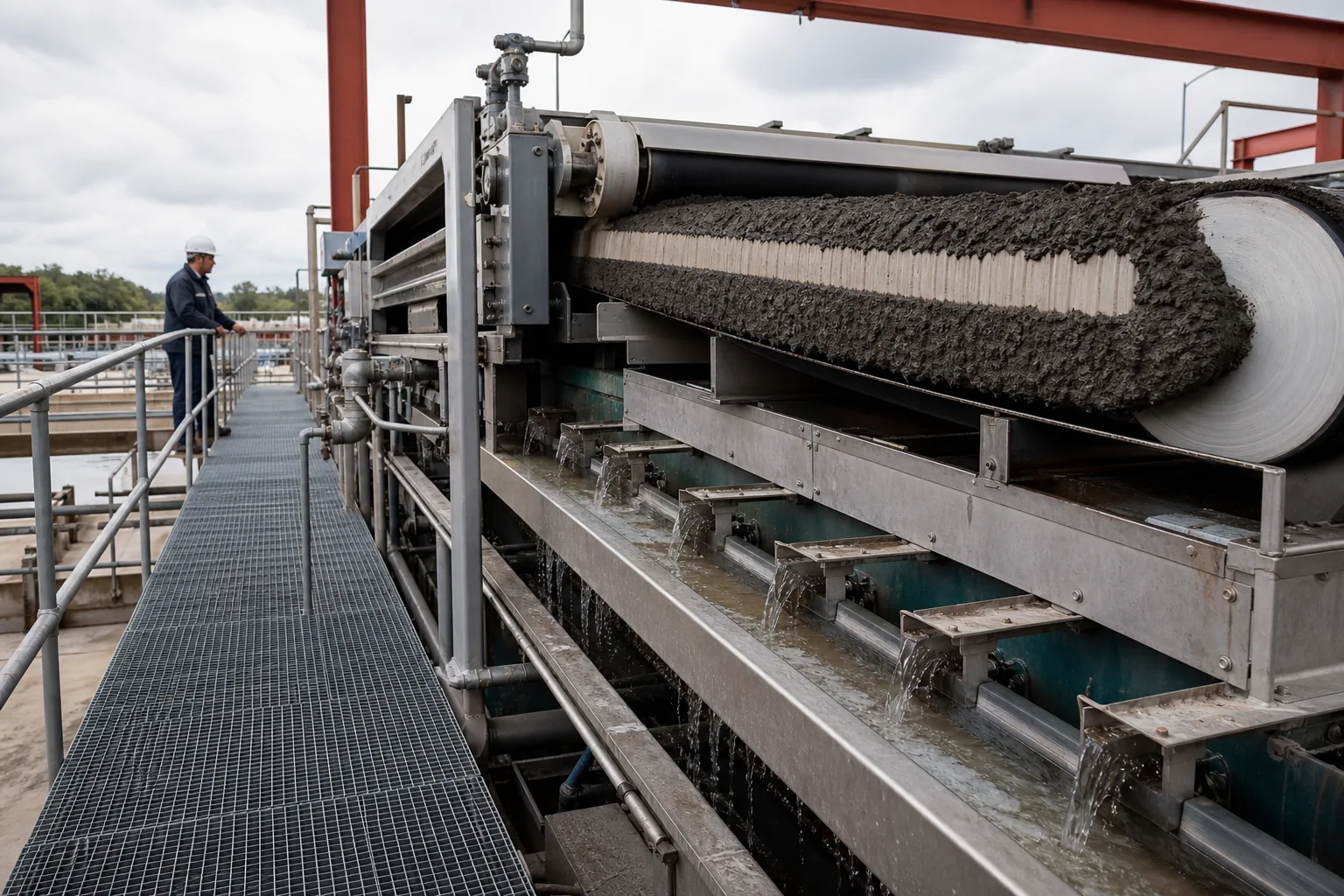
For a belt press, observe drainage, cake release and filtrate. For a centrifuge, review centrate, capture and throughput alongside cake handling. For a screw press, include outlet behaviour and the stability of the feed. Treat equipment settings as part of the result rather than attributing every change to the polymer.
Translate trial consumption into ordering
Keep dose units explicit and distinguish dry solids from wet sludge. Record measured product consumption over a stable run, then use the plant schedule to estimate the first supply requirement. Size the first order without turning an unverified jar-test dose into a long-term purchasing forecast.
Request a cationic candidate where appropriate
Discuss cationic polyacrylamide with the supplier alongside existing treatment results. Select the actual grade through testing, and review packaging and preparation equipment before committing to a different supplied form.