
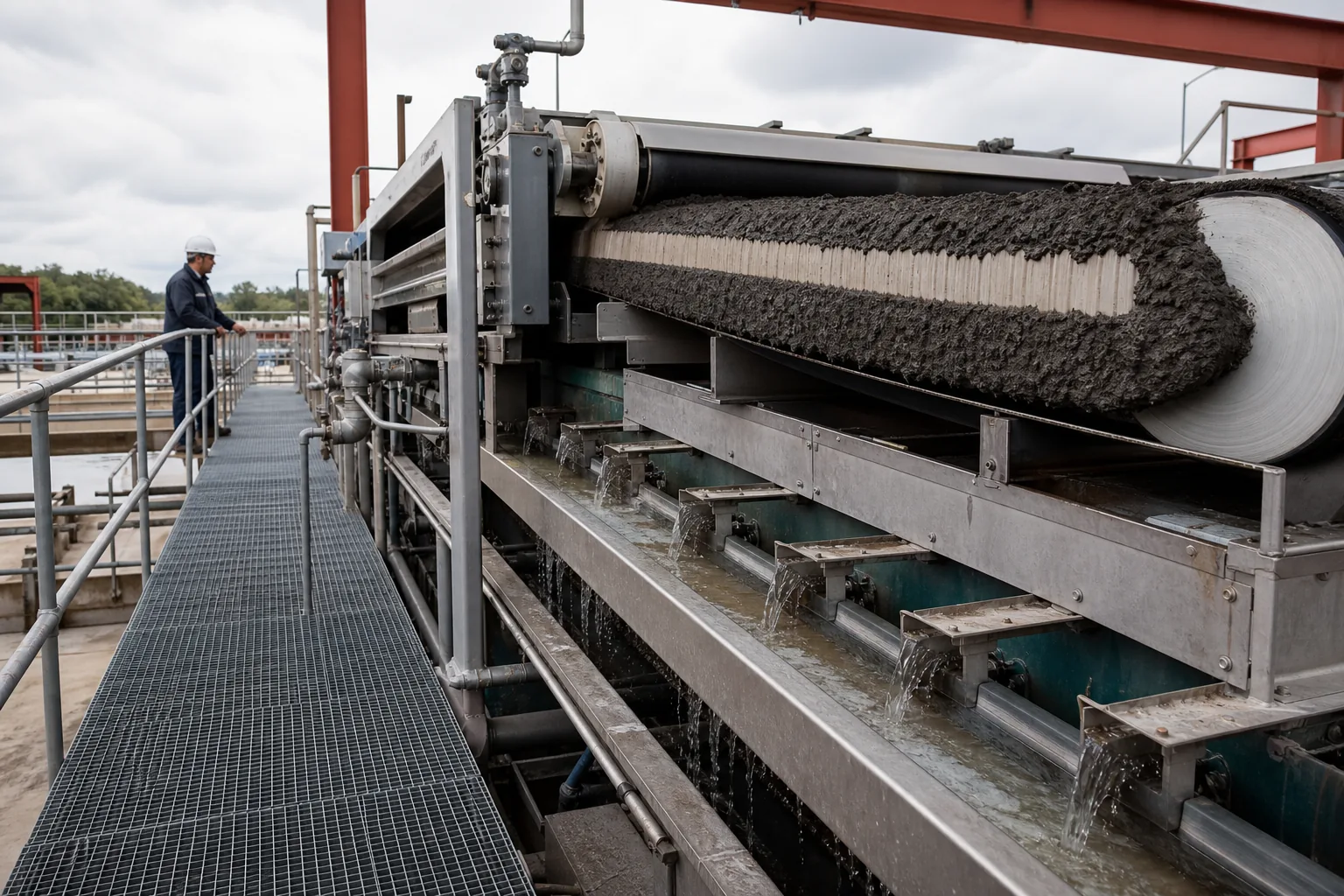
Specify the sludge and the machine
Describe the sludge source, blend variation, measured feed solids and upstream conditioning. Include the installed centrifuge and the present limitation. A supplier needs to know whether capture, centrate quality, throughput or cake handling controls the decision.
Keep the current product and relevant operating settings as a baseline. A favorable comparison made during a different feed event may need repeating before it supports a purchasing change.
Qualify the complete operating result
Use identified samples and code-specific preparation. Compare candidate and reference over a stated observation period. Do not change polymer, feed condition and several machine settings together and then assign the entire result to the new product.
Record commercial-product consumption with its units. If dose is expressed per dry-solids mass, use measured dry-solids throughput rather than wet sludge tonnage. Preserve centrate and cake observations together; an attractive cake photograph is not a complete acceptance record.
Confirm a practical supply definition
Check whether the preparation and dosing equipment can deliver the usable stock required by the accepted run. Confirm supplied form, package and current availability with technical sales. Powder and emulsion proposals may require different equipment tasks.
Use the dose-basis cost check for commercial comparison and sludge supply requirements for acceptance. The selected production code and any operating restrictions belong in the order. Do not accept an untested substitute simply because its cationic description looks similar.
Keep these purchase records
| Decision | Evidence to retain |
|---|---|
| Baseline | Sludge, centrifuge settings and incumbent product identify the comparison. |
| Dose | Commercial consumption and dry-solids basis have explicit, compatible units. |
| Acceptance | Capture, centrate and cake requirements remain attached to the code being purchased. |