
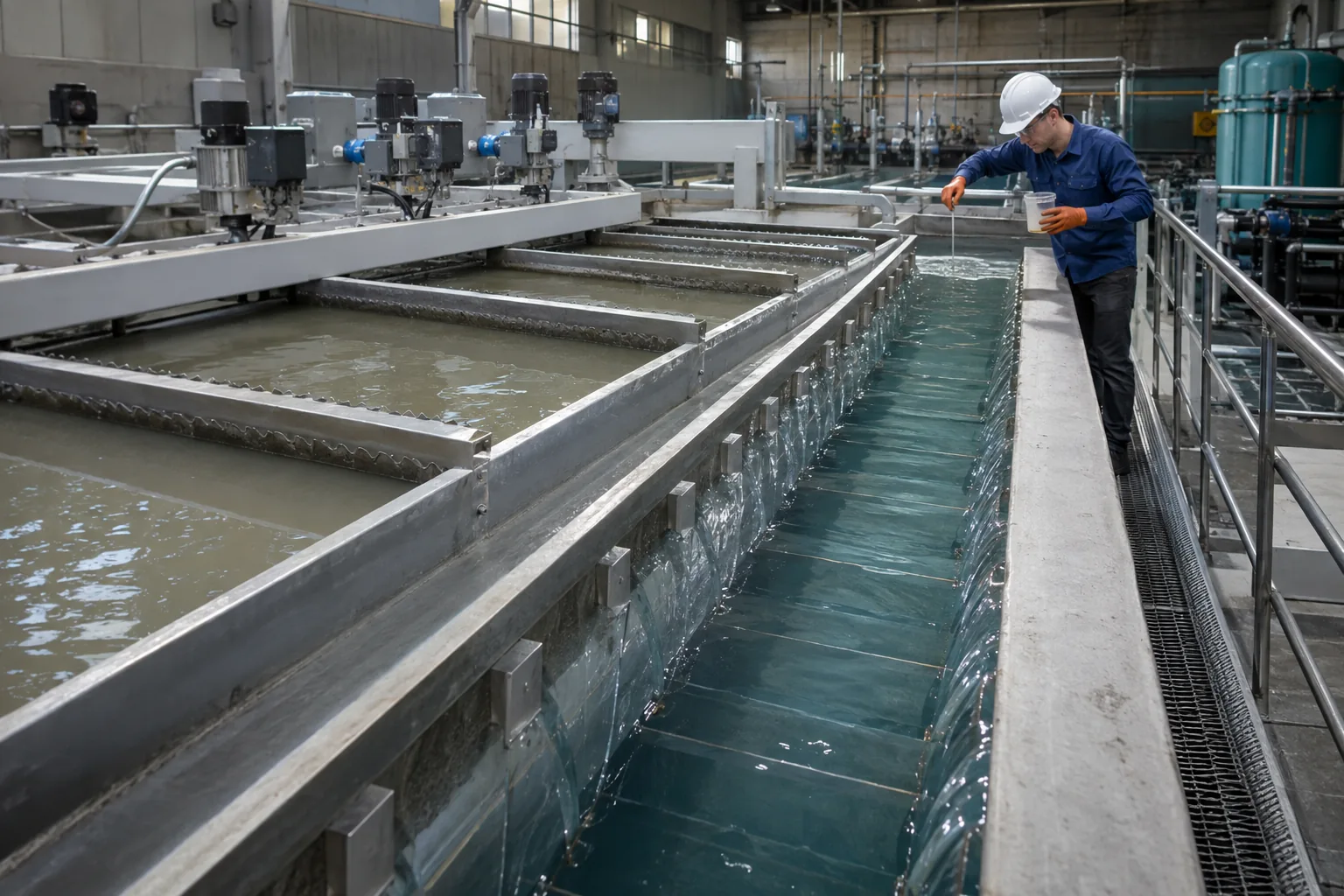
Define the suspension to be treated
State where the sample is collected and whether neutralization, precipitation or coagulant addition occurs upstream. Give measured water information and solids origin. Similar pH values do not establish that two industrial suspensions will respond alike.
Ask the supplier to explain the proposed nonionic grade and relevant alternatives. The family name is not a universal recommendation for acidic or saline conditions, and a general industrial result does not establish special-use approval.
Separate the stock-water question
Identify make-down water independently from the process feed. Follow the candidate instructions and inspect stock consistency before comparing application response. If a water source is under review, change that variable deliberately rather than replacing water and grade at the same time.
Keep concentration, preparation time and actual dose visible. A viscosity or molecular-weight description needs its measurement basis; it should not replace evidence for clarification, capture or downstream handling.
Limit the purchase to the demonstrated result
Compare the proposed sample against an identified reference on representative feed. Retain the required liquid and solids outcomes, transfer conditions and unresolved variation. A laboratory result can justify a bounded plant comparison without proving every future operating condition.
Use the NPAM product review and water-source sample planning before commercial approval. Request the exact production code, package and documents. If another code or application is introduced, review the evidence instead of extending the earlier approval silently.
Keep these purchase records
| Decision | Evidence to retain |
|---|---|
| Feed identity | Sampling stage and upstream chemistry describe the actual suspended material. |
| Water roles | Preparation source and treated suspension have separate records. |
| Approval scope | Qualified operating conditions and remaining uncertainty accompany the production code. |