
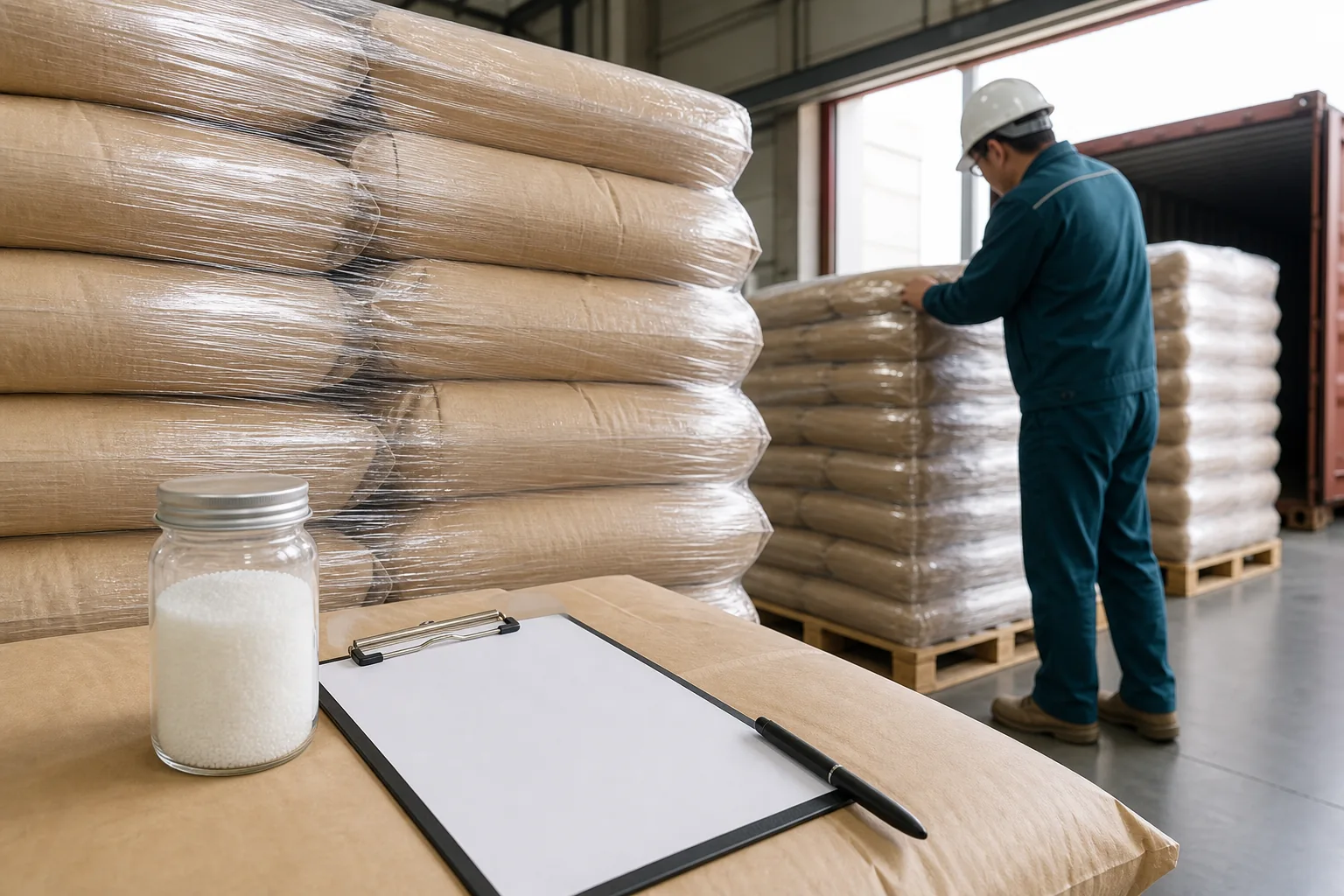
Begin with the supplied form
Ask whether the proposed grade is powder, emulsion or another supplied form and obtain its specific handling instructions. Packaging choices depend on that form and on the available supply arrangement. A container used for one formulation should not be assumed suitable for another. Confirm the net quantity, closure and identification details in the offer.
Powder handling and liquid transfer create different operational tasks. Check how the material will enter the preparation system, who will perform that work and what equipment is already installed. A larger pack is not automatically more efficient when it introduces manual handling or transfer difficulties.
Walk the receiving route
Review delivery access, unloading equipment, door dimensions, storage space and the distance to the preparation area. Translate a proposed shipment into actual handling units. A quote stated only in total tonnes can hide an unsuitable pallet arrangement or package weight. Ask for the relevant package dimensions and handling requirements before scheduling receipt.
Agree what happens if a seal is broken or damage is visible. Photograph and identify the affected packages, record their lot details and contact the supplier. Do not move questionable material into a shared hopper or tank before the discrepancy is resolved; doing so can make a small receiving issue difficult to trace.
Match package size to use rate
Estimate how long a package remains in use after opening. Consider moisture exposure for dry material and product-specific storage conditions for liquid formulations. Follow the exact grade instructions rather than adopting a generic shelf-life number. Include cleaning and resealing practices in the operating procedure where applicable.
A low unit price for a larger package must be weighed against handling effort, residual material and the rate of consumption. Small intermittent use and continuous high-throughput use may need different arrangements. Ask the supplier which options are actually available and compare their full practical cost.
Preserve the identity after receipt
Labels should allow the plant to connect the container to its delivery and batch record. If material is transferred into a secondary container, keep a controlled identification method so operators do not lose the approved product code. Avoid mixing unverified lots simply to save warehouse space.
Include packaging in the order-document review and the receiving plan. Confirm any special labels or pallet requirements before commercial approval. Packaging is an agreed order detail, not proof that the polymer grade has passed its application trial.