
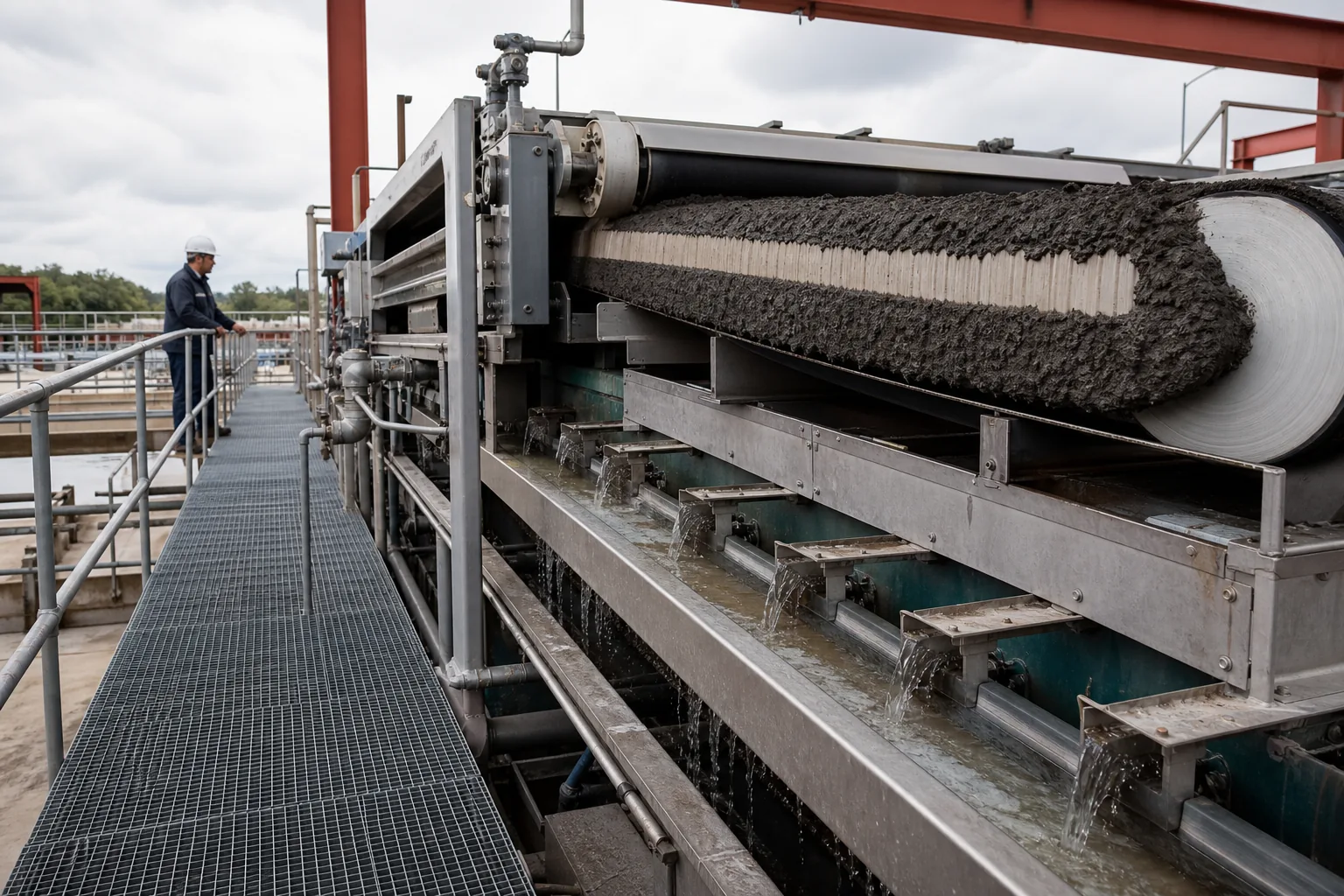
Identify the material reaching the press
State whether the feed is raw suspension, thickened material or conditioned sludge. Record upstream additions and the transfer route. Name the actual limitation: filtrate, capture, cycle stability, cake release or another measured requirement.
Do not select ionic type from an industrial category alone. A supplier needs the suspended material and treatment sequence to propose a reasoned candidate set. Keep a current-product control with identifiable sample codes.
Screen for the required filtration result
Prepare each candidate with its confirmed method and compare on representative feed. Record drainage together with liquid quality and captured solids. Faster initial water release can be misleading if the resulting filtrate or cake is unacceptable.
Where a laboratory method is used, state what it measures and what it cannot demonstrate. Settling behavior may help explain conditioning but is not a substitute for a bounded comparison on the actual press.
Keep the accepted conditions with the order
For equipment verification, retain relevant settings, feed condition, observation period and product consumption. Changes to cloth condition or feed preparation must remain visible rather than being credited to polymer alone.
Use the production handover to retain the selected code and any restrictions. Confirm preparation capacity, package and receipt requirements through the supply brief. If a cycle saving is claimed, preserve the timing and comparison conditions; do not turn one successful run into a universal performance guarantee.
Keep these purchase records
| Decision | Evidence to retain |
|---|---|
| Feed | Conditioning, thickening and transfer explain what the press actually receives. |
| Comparison | Drainage, filtrate and solids outcomes meet the agreed requirement together. |
| Order control | Accepted code and documented equipment evidence survive into the purchase record. |