
Put the product identity on the comparison sheet
Start with the supplier name, proposed code, ionic family and supplied form. Record which sample was tested and whether the quotation refers to that same material. A familiar trade name or a similar specification range is not enough to establish that two candidates perform equivalently. Keep untested alternatives in a separate column until the operating team has reviewed them.
For each offer, request the relevant technical data and preparation instructions. If one is powder and another is emulsion, flag the difference rather than immediately calculating a price advantage. The plant may need different preparation equipment or handling arrangements. Those constraints can eliminate an apparently attractive offer before a cost calculation is useful.
Compare an accepted result, not an attractive floc
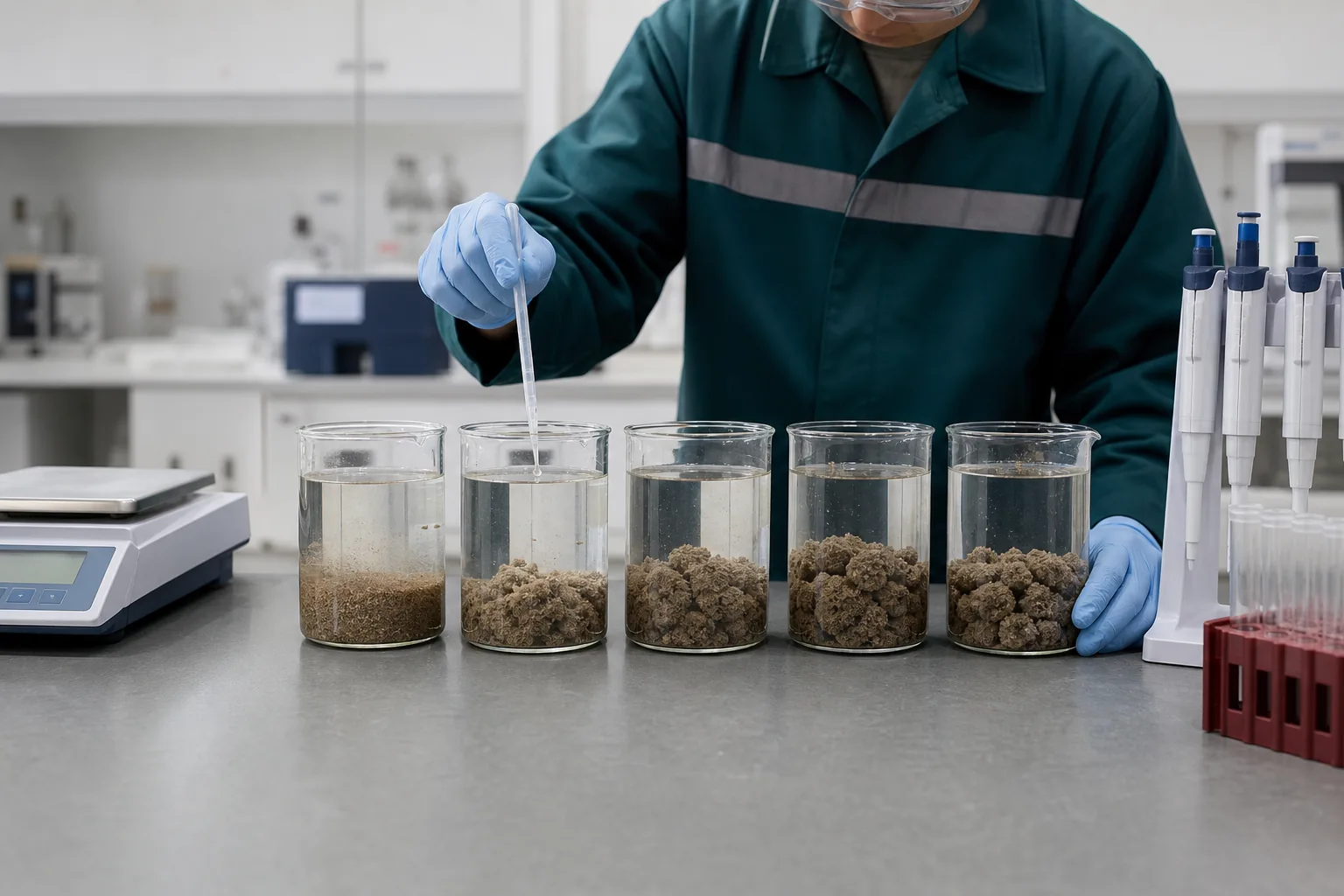
Define the endpoint first: for example, acceptable water clarity together with practical solids handling. Measure consumption during a stable, representative trial and record the units. A candidate that needs more product may still be economical, but a low-dose result is meaningless if it fails capture or throughput requirements.
Use comparable operating conditions. A laboratory run on fresh dilution water cannot be directly treated as a plant result using recycled water. Keep preparation concentration, mixing and observation time in the record so the process team can identify an unfair comparison.
Separate material cost from delivered scope
List the quoted currency, quantity, package size and the named delivery basis. Ask what is included and excluded. Transport, handling and documentation may sit outside the product price. Confirm commercial responsibilities in the actual quotation rather than assuming a familiar shipping abbreviation answers every question.
For a simple internal comparison, multiply measured kilograms of supplied product per treated unit by the comparable delivered price per kilogram. Keep preparation, labour and disposal effects visible as separate costs when they materially change. If normalising to active polymer, use a verified active-content basis; do not substitute an unexplained solids percentage.
Resolve differences before issuing the order
Highlight missing information rather than filling it with assumptions. One offer may lack confirmed packaging while another has an unverified treatment dose. Ask each supplier to close those gaps and record when the quotation expires. Approval should identify both the technical candidate and the commercial version accepted.
Use the supply quotation brief for the final request. Then check order documents so the approved code survives into the delivery record. Keep a copy of the comparison for the next purchasing cycle; a revised price or changed process requires a fresh check, not automatic acceptance of the previous conclusion.