
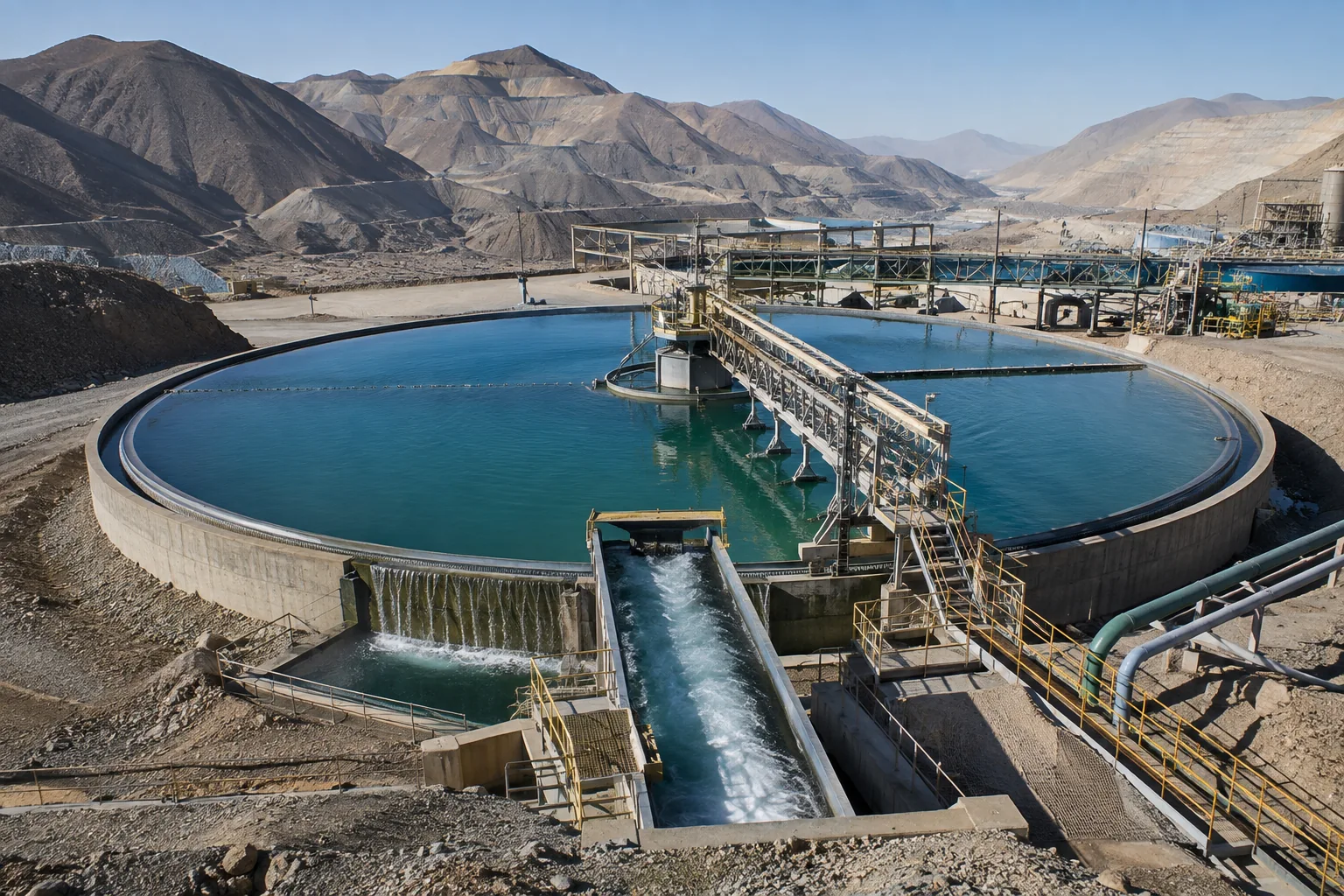
Collect a representative feed record
Identify material source, wash stage, fines collection point and the reused-water fraction. Describe credible changes in clay or mineral content. A highly diluted or already settled sample can understate the separator’s normal duty.
State the required recovered-water quality and the solids destination. Anionic or another justified polymer family may deserve screening, but no family name guarantees success on every sand source. Ask why the proposed samples were selected.
Assess water and solids together
Compare controlled preparations at declared dose units on the same feed event. Record overflow at a defined observation time alongside bed behavior. A rapid interface is not a complete result if remaining fines make the return water unsuitable.
Follow material to the downstream solids operation and retain transfer conditions. When bench and plant observations disagree, review preparation and the sampling route before attributing cause to the commercial grade.
Create an order that can be repeated
Keep the accepted sample code, feed range and measured commercial consumption. If reused water is proposed for stock make-down, test that role separately rather than assuming the process-water result proves preparation compatibility.
Use recycled-water sample planning and mineral-water supply requirements for the quotation. Confirm package handling and storage fit before buying a larger quantity. If the sand source changes materially, identify the need for another review instead of assuming the old supply approval still covers it.
Keep these purchase records
| Decision | Evidence to retain |
|---|---|
| Representativeness | Fines source, sampling stage and meaningful feed changes remain identifiable. |
| Acceptance | Recovered water and the downstream solids route both meet the stated requirement. |
| Continuity | Qualified code and feed range define when a later supply decision needs review. |