
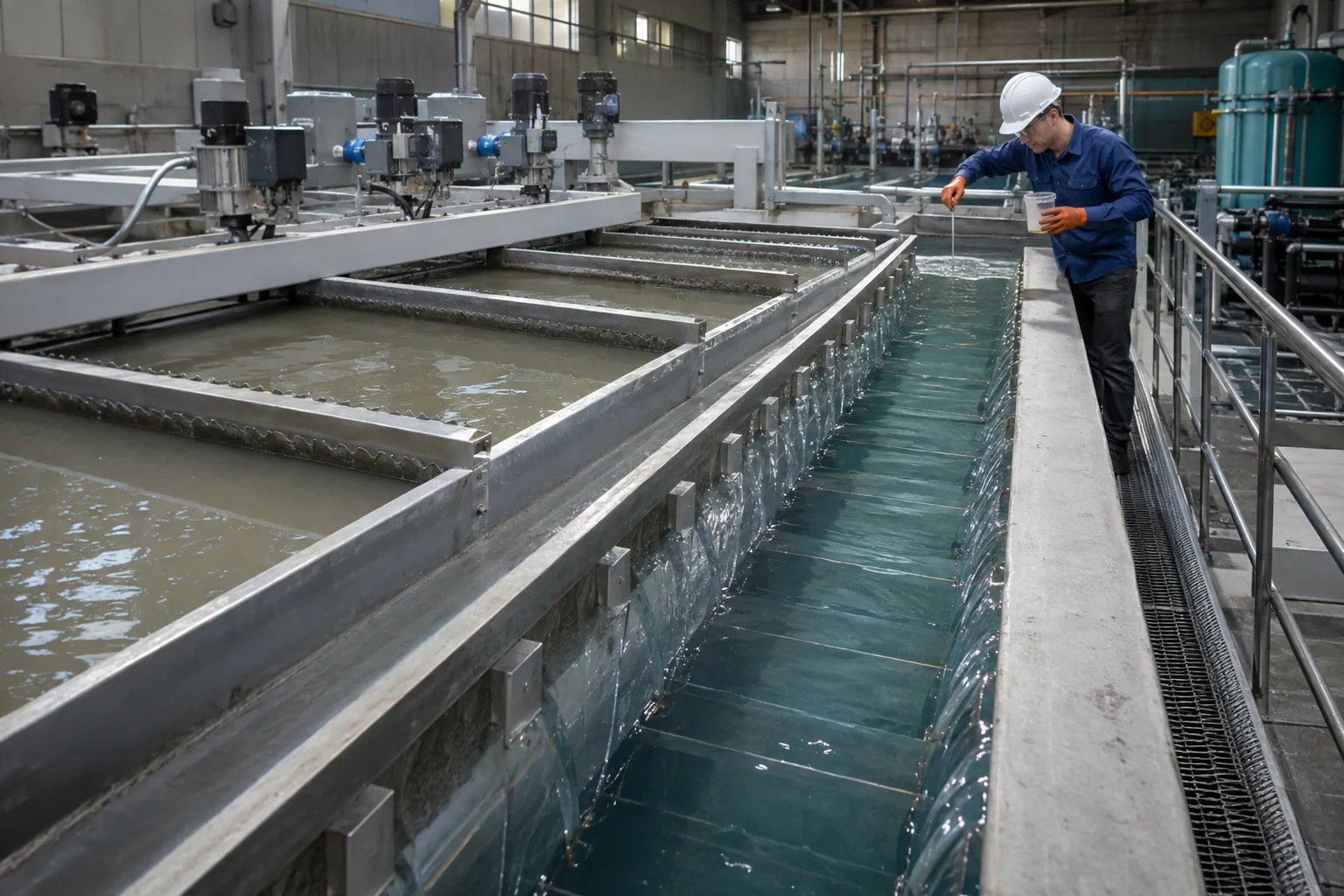
Keep product form separate from performance
Powder and emulsion are supplied forms, not universal performance rankings. A proposed grade still needs to be matched to the process and tested against the required separation result. Do not assume two products with similar family names are equivalents or that a liquid product can be added directly without the correct preparation procedure.
Ask the supplier for the exact code, technical data and preparation instructions. Describe the existing make-down and dosing system in the enquiry. The right commercial discussion starts with whether the plant can prepare the candidate consistently, not whether one form looks easier on a price sheet.
Review preparation equipment
For powder, check the wetting and dissolution arrangement, available preparation volume and how operators prevent poorly dispersed material. For emulsion, obtain the inversion and dilution instructions for the proposed formulation and verify compatibility with installed equipment. Do not transfer times, concentrations or temperature limits from an unrelated grade.
Record water quality, throughput, residence time and transfer conditions during the trial. A poorly prepared polymer can create a false impression of unsuitable chemistry. Before increasing dose, confirm that the product has been prepared as instructed and that the dosing measurement is reliable.
Compare consumption on a declared basis
Record whether a reported dose refers to supplied product or active polymer. If converting between them, use a verified active-content value and preserve the units. An unexplained solids figure should not be treated automatically as polymer activity. When comparable activity data are unavailable, compare measured supplied-product consumption at the same accepted operating endpoint.
Include preparation effort, handling and any equipment changes in the purchase comparison. A lower delivered price per kilogram can be offset by higher required consumption or a practical limitation in the make-down system. Conversely, a more expensive material may be justified only when the operating evidence supports the claimed benefit.
Approve the handling plan before ordering
Review packaging, storage and transfer instructions for the actual product. Liquid formulations can have grade-specific requirements, while dry material needs its own exposure controls. Ask the supplier how to assess material after a suspected storage or transport problem rather than improvising a restoration method.
The quotation comparison should retain these preparation and handling differences as visible decision points. Include the selected form in the order brief, and obtain agreement before any substitution. A successful purchase is a product the plant can prepare, use and reorder consistently, not merely the preferred form on paper.