
Define why supply is changing
State whether the driver is continuity, cost or an unmet operating requirement. Preserve the outcomes that must not deteriorate. Keep the incumbent product and available documents identifiable rather than reducing the existing material to a broad family name.
Ask what the proposed match actually means: ionic type, reported property or an application candidate. A familiar description does not establish identical preparation, consumption or separator behavior.
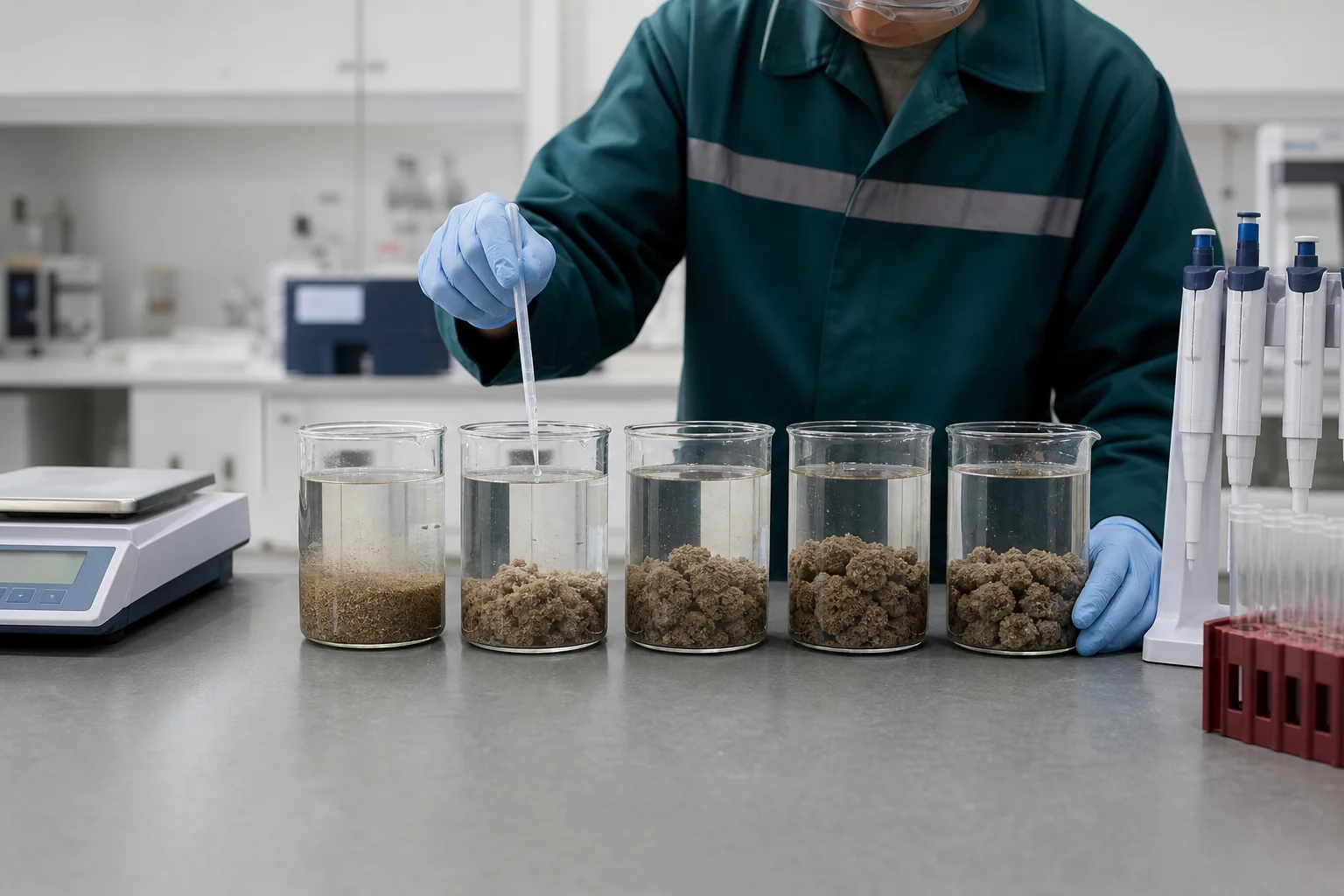
Run a comparison that can be interpreted
Prepare each code under its own confirmed instructions and record the differences. Use representative feed and a defined dose basis. If active normalization cannot be supported, retain commercial-product consumption instead of inventing a conversion.
Keep liquid quality, captured solids and downstream handling visible. Advance a promising sample through a bounded equipment trial with a fallback and stopping condition under plant controls. A favorable isolated observation is not complete approval for every feed condition.
Approve a traceable first delivery
Link the selected sample to the proposed production code, specification and package. Define receipt evidence before dispatch and identify who reviews an unexpected result. Do not let an urgent stock requirement silently waive the technical gate.
Use purchase specification controls and the operating handover for the first order. If separate settings or consumption are needed, describe them accurately. A useful replacement need not be represented as an unsupported one-for-one equivalent.
Keep these purchase records
| Decision | Evidence to retain |
|---|---|
| Objective | Continuity, cost or performance driver is defined alongside outcomes that must be preserved. |
| Baseline | Incumbent and candidate have identifiable preparation and matched operating evidence. |
| First order | Production code, receipt check and any limits follow the approved sample. |